

Music & Pop Culture
Society and Events
Beginning of a Century and The Roaring Twenties


1900 - First hamburger created in USA
1902 - Cuba gains independence from USA
1905 - Russian Revolution
1906 - Mount Vesuvius erupts and devastates Naples
1906 - San Francisco earthquake
1910 - Mexican Revolution
1911 - China Revolution
1912 - Titanic was sinking
1914 - Panama Canal completed
1914-1918 - World War I
1917 - Russian Revolution and birth of USSR
1918 - Armenian Genocide
1919 - Irish war of Independence
1920 - Rise of communism and fascism
1920 - Women's suffrage movement in USA
1920 - Prohibition of alcohol in the USA
1924 - Inmigration act
1929 - Black Tuesday (October 29th). Great depression
1930's & WWII
1927 - Chinese Civil War
1931 - Second Republic in Spain.
1932 - Colombia-Peru War
1932 - Bolivia -Paraguay War
1932 - Franklin D. Roosevelt is elected Presidentt of the USA.
1933 - Rise of Nazism
1935 - Italian invasion of Ethiopia
1936 - Spanish Civil War
1937 - China-Japan War
1939 - 1945: World War II:
-
Nazi Germany invades Poland, Denmark, Norway, Benelux, and the French Third Republic from 1939 to 1941.
-
Soviet Union invades Poland, Finland, occupies Latvia, Estonia, Lithuania and Romanian region of Bessarabia from 1939 to 1941.
-
Germany faces the United Kingdom in the Battle of Britain (1940).
-
Germany attacks the Soviet Union (June 22, 1941).
-
The United States enter World War II after the attack on Pearl Harbor on December 7, 1941.
-
The Holocaust was the genocide of approximately six million European Jews during World War II.
-
The German Instrument of Surrender signed (May 7–8, 1945). Victory in Europe Day.
-
Atomic bombings of Hiroshima and Nagasaki (August 6 and August 9, 1945); Surrender of Japan on August 15.
-
World War II officially ends on September 2, 1945.
1944 - Iceland declares independence from Denmark
1945 - UN was born.
1946 - Greek Civil War
1947 - Arab-Israeli War
1949 - NATO was born.
1950's & 1960's: Revolution!!
1950 - Cold War conflicts involving the influence of the rival superpowers of the Soviet Union and the United States.
1950-53 - Korean War: It was a civil war between North Korea and the Republic of Korea (South Korea).
1953-59 - Cuban Revolution: The 1959 overthrow of Fulgencio Batista by Fidel Castro and Che Guevara and other forces resulted in the creation of the first communist government in the Western hemisphere.
1955 - Decolonization of former European Colonial empires in Asia and Africa.
1957 - The European Communities (or Common Markets), the precursor of the European Union, was established with the Treaty of Rome.
1961 - Construction of the Berlin Wall.
1961 - The Bay of Pigs Invasion: Cuban exiles (US supported) tried to overthrow Fidel Castro.
1962 - The Cuban Missile Crisis - Cold War
1962-65 - Second Vatican Council.
1963 - Kennedy's assassination.
1963 - Martin Luther King Jr.' speech 'I have a dream'.
1963 - Feminism: Betty Friedan's book: "The Feminine Mystique"
1964 - Vietnam War.
1965 - Malcolm X was assassinated by members of the Nation of Islam.
1965: The youth involved in the popular social aspects of the movement became known as hippies.
1966 - Cultural Revolution in China: Mao Zedong
1966: NOW (National Organization for Women)
1967 - Six days War War between Israel and Egypt, Jordan and Syria.
1968 - In May, student and worker uprising in France.
1968 - Martin Luther King Jr. was assassinated by James Earl Ray.
1969 - Woodstock festival.
Fashion
There was a great demand of nylon stockings.
-
Teens and college co-eds adopted skirts and sweaters as a virtual uniform.
-
A popular style of brassiere for women during the 1950s was the "bullet bra", where cups were pointed in a conical shape.
-
Women's hair was worn short and curled with the New Look, and hats were essential for all but the most casual occasions.
-
Men's suits were broad-shouldered and often double-breasted.
-
Men's hair fashion favoured the wet look.
-
The bikini came into fashion in 1963 after being featured in the film Beach Party.
-
The hippie movement late in the decade also had a strong influence on clothing styles, including bell-bottom jeans, tie-dye and batik fabrics, as well as paisley prints.
-
Mary Quant invented the mini-skirt which became one of the most popular rages in the late 1960s.
-
Hairstyles changed from crew cut to long hair with sideburns. Afro style appeared.

Girl dress in 1955

Her hair is worn in a short and curly poodle cut in this publicity photo for Sabrina, 1954.

Girl dress in 1955
1971 - Bangladesh Liberation War.
1972 - Munich Massacre at the Summer Olympics.
1973 - Yom Kippur: Arab-Israeli conflict.
1975 - Cambodian Civil War.
1976 - Soweto Uprising: 700 black school childred killed by Security Police.
1978 - Ugandan-Tanzanian War.
1979 - Iranian Revolution: Ayatollah Jhomeini.
1979-1988 - Soviet war in Afghanistan.
1980 - Ronald Reagan was elected US President
1980-1988 - Iran-Iraq War.
1980-1992 - Salvadoran Civil War
1982 - Falklands War: Argentina invaded British islands.
1982 - Lebanon war
1987 - First Intifada
Society:
1970 - Green Revolution: self-sufficiency in food.
1972 - Urban prosperity got over Agrarian life .
1972 - Cable TV appeared.
1973 - Oil crisis:
1974 - Isabel Martínez de Perón became Prime Minister in Argentina.
1974 - Zeitgeist: Interdependence of economies.
1974 - Four Asian Tigers: Hong-Kong, South Korea, Singapore and Taiwan transformed their economy.
1979 - Margaret Thatcher became Prime Minister in U.K.
1980 - Democracy in Argentina, Uruguay, Brazil and Chile after years under dictatorship.
1982 - Independence of Canada.
1986 - Independence of New Zealand.
1989 - Tiananmen Square protests
1989 - Fall of the Berlin Wall
1970's & 1980's: Cold War came to an end
Soweto Uprising
Tiananmen Square
Fall of the Berlin Wall


Fashion
1970 - Great influence of the hippie movement.
1971 - Bell-bottomed pants: influence of the movie "Saturday Night Fever"
1972 - Sideburns and beards got popular.
1973 - Platform shoes.
1975 - Mohawk hairstyle associated with punk subculture.
1977 - Leisure suits
Ray-Ban Sun glasses
Heavy metal fashion: teased hair, ripped jeans and neon clothing.
Clothing trends: miniskirts, leggings, leg warmers.
1990's & 2000's: Generation Y "Millennials"
POLITICS
1990 - First Gulf War
1991 - Yugoslav Wars
1991 - Somali Civil War
1991 - Ethiopian Civil War
1994 - First Chechen War
1994 - Rwanda genocide.
1994 - Nelson Mandela became president of South Africa.
1996 - Taliban took control of Afghanistan.
1998 - Kosovo War
1999 - Second Chechen War
2000 - Capitalism spread all around the globe.
2000 - Anti-globalization protest appeared in USA.
2000 - Youth culture: Power in young people.
2000 - Highly individualistic: Generation X
2001 - Attacks on NYC, Washington and Pennsylvania (2977 killed)
2001 - Afghanistan wars
2002 - Bali Bombings (202 killed)
2003 - Second Gulf War
2003 - Istanbul bombings
2004 - Madrid train bombings
2005 - London bombings
2006 - Lebanon War
2008 - Mumbai attacks
Independence of Croatia, Slovenia, Bosnia and Herzegovina and Macedonia.
Independence of Eritrea
Independence of Montenegro and Kosovo
1990 - First Gulf War
 |  |  |
|---|---|---|
 |  |  |
 |  |  |
 |  |  |
 |  |
Fashion
1990s - Time for supermodels: Linda Evangelista, Naomi Campbell. Eva Herzigova, Kate Moss, Claudia Schiffer
The Rachel, Jennifer Aniston's hairstyle on the hit show Friends, became a cultural phenomenon with millions of women copying it worldwide.
The Curtained Haircut increased in popularity.
The model 1300 Wonderbra style has a resurgence of popularity. The Grunge hype popularized flannel shirts.
Cyber Goth is attached to techno and progressive music, with a taste for dark clothes, colorful hair and comic style.
They took inspiration from 60's and 70's styles.
Bleached and spiked hair for boys, and long and straight hair for girls.
Crop tops & low rise pants
tracksuits
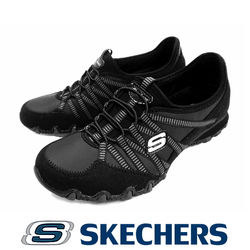
Skechers shoes
Emo fashion: dark coloured skinny jeans, T-shirts bearing rock bands, and ideas of selfharm and suicide.